





Yee Gee Kim Yeung Ma is the basic foundation stance of Wing Chun. This is the very first thing you learn on day one of class and if you fall in love with the art, something that you will spend the rest of your lifetime mastering. The source of Wing Chun strength comes about from the stance, and since Wing Chun is an art that relies on the bare minimum of muscle, one must focus on perfecting this stance. The basic goal for this stance is to develop how to find, control, maintain and overall be aware of one’s center.
Front
Side
Angle
Ver 1.0
2) SLT - While SLT is a good way to practice, your YGKYM it does come with one major flaw. The idea of SLT is one little idea, and with all the hand motions and angles and positioning one must do, focus on one’s center ends up being at the bottom of the totem pole. Often times, if a student does practice SLT, I tell them to check their center after each section of the form. That way they can have some level of awareness in their stance, and not only in their hands.
3) Timeout - The idea of this particular exercise is to stand within tan sau range near a wall, and face it with your YGKYM. Once you are in proper position, you gently push with either hand against the wall, and see how your center reacts to that initial push. If done correctly, you’ll feel solid and rooted and feel the force actually driving down to your feet. If you watch the video, my first attempt is the correct one, and you simply see me maintaining my stance while pushing against the wall. On the other hand, done incorrectly and you’ll feel yourself being pushed back, almost immediately. At the end of this video, you can see twice I push against the wall and immediately fall backwards.
1) Couch Potato - Probably the best of the 3 exercises that one can do to focus on YGKYM, simple for the reason that it doesn’t require a partner, and you can literally do this anytime you plan on watching TV. Simply open up your stance, and focus on your YGKYM for at least 10, 15 to 30 minutes or the length of time of the entire show. Normally after standing for a good 5 minutes, you’ll feel the ill-effect of a lousy stance, and will have to make adjustments, on the other hand, if you’ve got your center, you’ll be able to stand in place comfortably for the entire episode.
-
-How often should I practice YGKYM?
-
-Just like in all things in Wing Chun, when your in the mood and you’ve got the time, spend as much time working on the stance. It literally is the foundation of all things that we do in Wing Chun, so the better the stance, the better you do everything else in Wing Chun.
-
-How come I feel slight discomfort when doing the stance?
-
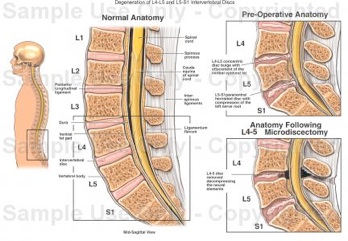
-That’s your body telling you that your doing things wrong. The most common is probably discomfort in the lower back area. More often then not, your forgetting to tuck in the L4, L5 region and basically have your butt stuck out. Another common area is just above the knee, and this is normally caused by over sinking the stance and having the knees go beyond the toe area. Also, the upper back can get achy as well, if you force the pull back of the 1st motion beyond the point of relaxation. Finally, the ankles can feel stiff as well, since often beginners squeeze the knees into the center instead of sinking it in the direction toward the toes. Learn to listen, everything we do in Wing Chun should feel good.
-Will I always have to concentrate maintaining my center in practice or in a real fight?
- In the beginning especially when you practice yes. But all things we do in Wing Chun is for development, so the goal in the end is to make the control of your center as natural as you breathing or eating without thought.
- What’s the over all goal of YGKYM?
- If I gave you a plate and a marble, and told you to maintain that marble in the center of the plate, you could say that’s almost the same goal in learning YGKYM. The stance is designed to help you find the center, maintain it, and be aware of it at all times. The goal is natural movement without thought and to be able to move your center at will.
-
-Is this my actual fight stance in a real fight?
-
-Of course not, development and application are 2 different things. In a fight situation, you stand as you want to stand, as long as you maintain the principle of the development which is the awareness of your center. YGKYM is to help you learn that feeling, once you know how to get that feeling, you don’t have to stand in perfect stance in order to get it.
-
-How long will it take before I can utilize my YGKYM in a real fight?
-
-Everyone is different, so time tables may not be of any use here, especially if the question is in regards to fighting. For the most part in fighting, you just need the guts, a punch and the aggressiveness to finish of your opponent. So, nothing has to be perfect in execution, but the focus of pulling the trigger plays more of an important role. Just remember fighting is easy, developing the skill is a bit harder.
-
-Why am I pigeon toed when I do the form?
-
-The focus upon opening the YGKYM stance should be in your center. Without doing this and practicing the form in this manner you won’t be able to find the center. Also the turn in for the pigeon toed positioning should be natural, and eventually in time once you develop how to find the feel of the center, holding it in this pose won’t be necessary.
General Description
How to YGKYM

pt1
pt2
pt3
pt4
Attention to detail Lvl 1
Back in the days (exeperience )

Step 1 - Have the feet together where the heels are touching and both sides of one’s big toe has a small gap forming a V. Stand up in a straight and relaxed manner with both hands on the side. If done correctly the chin should be pointing down, not up. In the correct position you’ll feel the entire body steady along with the butt cheeks slightly tensed. Begin crossing the left arm over the right in your center, and once you feel the chest slightly cave in, begin flipping the hands over so the palms face up and the left hand is over the top. After that, sink the elbows back to their natural position making a fist in the during the retraction period. The fist should generally be in line with the chest and also along the same line as the elbows, as you feel the shoulders coming forward. This is the complete process of step number one.
Step 2 - Bend the knees every so slightly, and during this period tuck the hips so that it rolls in. Maintain the center during this time and make sure that you do not end up leaning back.
Step 3 - At this point start spreading the feet open, from its slight V position to a goal of 10 o’clock for the left foot to 2 o’clock with the right foot making as natural wide V as possible, the heels during this time stay at the same spot. Normally, beginners have a hard time doing this simple stretch. Also make sure that your maintain what you achieved during steps 1 and 2.
Step 4 - At the final stage of YGKYM move the heels to the outside so that you create a stance where you are slightly pigeon toed. At this point, you’ll want to make sure that you’ve maintained that slight hip tucked in, as well as feeling a pulling stretch from the top of the vertex.
Teachers Notes
Teachers Notes

Teachers Notes
When I first started teaching, I was so quick to correct the student after a mere couple of seconds of playing around with the stance. The fact is knowing the wrong’s is just as important to helping him figure out how to do it correctly. So, when you do show the stance and gave him the necessary information to practice it, sit back and shut up for awhile and let him experiment. Understand that this is day one, even if you shower him/her with all this wealth of information, it literally will go through one ear and out the other. Less is better on day one, and the main goal is allow them to feel what it means to actually have the center. So for example, I’d make the student open the stance, then I’d push to see if they have their center, and then walk away. See if they can in fact try to hold it for 3 to 5 minute increments. Allow them to take their necessary break, repeat the process but put variation in it as well. So, make them open the stance, let them find their own center, have them sit out the stance for a pinch, and then come in and help them find their center. In time as a teacher you’ll know when you should come in to help or sit back and let them struggle.
Side pt1

The best tip I can give regarding the 4 steps to open YGKYM, is feed the student just enough so that they can eat. Thus, only if they ask for more then give it to them. Allot of times, depending on your level of teaching, you may have tons and tons of information to share with the student. But over feeding can also lead to more confusion. As an example, in step 1 simply state what they have to do to complete the task. If they then ask, what is the purpose of it, then answer. I’ve always gone by the following of Sifu, that students ask the right questions when they are ready for more to digest.


When your a beginning teacher, the best advice Sifu said, was to always teach the truth. So, there maybe be times where you come upon a question which you may not be able to answer. Sometimes, you can get the answer by either feeling the answer through doing the motion. However, if that fails, then do not be afraid to say that you don’t know .
Exercise

cp
n/a
to
Teachers Notes
The reality of things is that anytime the student is standing he or she is practicing the stance whether they are aware of it or not. As a teacher, your job is to help them get to door, and the rest is up to them. Often times, you will need to repeat yourself like a broken record to fix your stance, stay 50/50, keep shoulder width apart like a parent talking to a teenage kid. But, sometimes words are not necessarily the best remedy for understanding the wrong. Try getting into a habit of allowing the student to feel their errors, and reach that level of “awareness.” Only then, can they take one level and move to the next. You must remember you as the teacher can never do it for them, but simply aide them in the process. And as a final note, that path to reach one student may not necessarily be the same path for the other student to understand the process. Every student is different, and a good teacher may even have to create a new process in order to help the student learn the lesson. Once you can do that and mold drills at your command, you truly have then grown.
The best tip I can give regarding the 4 steps to open YGKYM, is feed the student just enough so that they can eat. Thus, only if they ask for more then give it to them. Allot of times, depending on your level of teaching, you may have tons and tons of information to share with the student. But over feeding can also lead to more confusion. As an example, in step 1 simply state what they have to do to complete the task. If they then ask, what is the purpose of it, then answer. I’ve always gone by the following of Sifu, that students ask the right questions when they are ready for more to digest.
Total # of exercises = 3 The exercise is also place in order of importance.
Each exercise also gives a suggested duration of time to practice it as well as the frequency in a week.

Windy City Wing Chun Gung Fu Federation, Inc © 2009